Commercial and office cleaning operations require systematic risk assessment to identify hazards, ensure safety, and maintain compliance with Australian workplace regulations. A robust risk assessment process protects cleaning staff, office workers, and visitors while meeting Queensland’s Work Health and Safety Act 2011 requirements. This comprehensive approach prevents incidents, reduces liability, and creates healthier work environments across Brisbane.
What Is a Commercial Cleaning Risk Assessment?
A commercial cleaning risk assessment is a structured process that identifies workplace hazards, evaluates their potential impact, and implements control measures to prevent incidents. This systematic approach transforms safety management from reactive guesswork into evidence-based prevention. For Brisbane offices, proper risk assessment ensures compliance with Queensland’s Work Health and Safety Act 2011, protects workers from chemical and physical hazards, and maintains productive work environments.
The Work Health and Safety Act 2011 (Qld) establishes the legal framework requiring employers to identify hazards, assess risks, and implement appropriate control measures. Commercial cleaning businesses must document these processes and conduct regular reviews to maintain compliance.
“Risk comes from not knowing what you’re doing.” – Warren Buffett, Chairperson of Berkshire Hathaway
Benefits of Conducting Risk Assessments
Implementing thorough risk assessments delivers significant advantages for commercial cleaning operations. Enhanced workplace safety emerges through targeted hazard identification and control implementation. Legal compliance reduces liability exposure while meeting Queensland OHS regulations. According to a blog by Human Focus, The information collected by the risk assessment is then used to develop measures to either eliminate the risks completely or control them ‘so far as is reasonably practical. Operational efficiency improves as staff follow clear, safe procedures with appropriate equipment. Client confidence increases when businesses demonstrate visible commitment to maintaining healthy work environments.
The Five Essential Steps of Risk Assessment
Step 1: Identify Hazards
Conduct comprehensive site walkthroughs examining all work areas including floors, restrooms, kitchens, and high-touch surfaces. Look for potential chemical, physical, and biological risks such as spill areas, damaged equipment, or inadequate ventilation. Review cleaning product labels and Safety Data Sheets to understand substance-specific hazards.
Step 2: Determine Who Might Be Harmed
Assess exposure risks for all individuals including cleaning staff, office workers, contractors, and visitors. Consider how different groups might encounter hazards, such as cleaners inhaling disinfectant fumes or office staff slipping on wet floors.
Step 3: Evaluate Risks and Implement Controls
Rate each hazard’s likelihood and potential severity using a risk matrix approach. High-risk items like corrosive chemical exposure require immediate controls including enhanced ventilation, secondary containment, and upgraded personal protective equipment. Lower-risk scenarios may need standard procedures and routine training.
Step 4: Record Findings
Document all identified hazards, risk evaluations, and control measures in a formal risk register. This creates an auditable safety record demonstrating due diligence to regulators and stakeholders while supporting insurance requirements and continuous improvement efforts.
Step 5: Review and Update
Conduct regular reviews at least annually or whenever cleaning products, equipment, or workplace layouts change. Update assessments promptly after incidents or near-misses to ensure controls remain effective and aligned with current safety standards.
Common Workplace Cleaning Hazards and Mitigation
Chemical Hazards
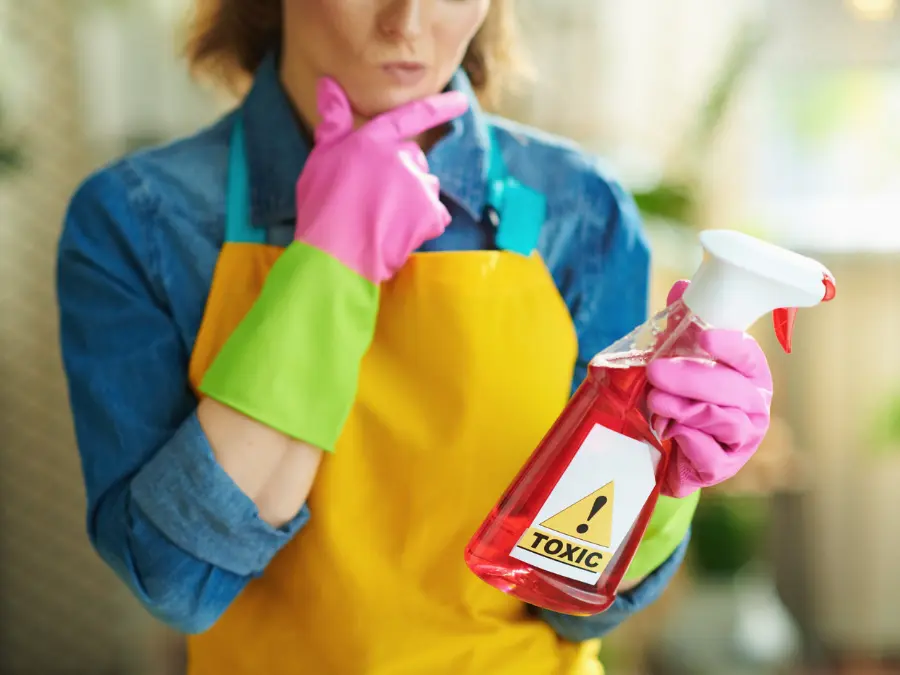
Chemical risks arise from cleaning products containing potentially harmful substances. According to a blog by High Speed Training, carrying out a risk assessment will ensure that cleaning hazards in the workplace, such as those explained above, are identified, assessed and controlled with sufficient measures. Mitigation strategies include consulting Safety Data Sheets for proper handling instructions, storing products in labelled, well-ventilated areas, and selecting eco-friendly or low-VOC alternatives where possible. Ensure proper dilution ratios and maintain chemical spill response kits.
Physical Hazards
Physical risks include slips, trips, and falls from wet floors, uneven surfaces, or trailing equipment cords. Control measures involve using clear warning signage, installing non-slip mats, managing cables properly, and maintaining equipment regularly. Safe lifting techniques and ergonomic tool selection prevent musculoskeletal injuries.
Biological Hazards
Biological risks from bacteria, viruses, and other pathogens on high-touch surfaces require specific controls. Use approved disinfectants following manufacturer specifications for contact times and dilution ratios. Implement proper hand hygiene protocols and schedule regular deep-cleaning cycles for comprehensive infection prevention.
Safety Protocols and Personal Protective Equipment
Essential PPE for commercial cleaning includes chemical-resistant gloves, eye protection, respiratory protection for aerosol tasks, and slip-resistant footwear. Each item must be appropriate for specific tasks and regularly inspected for effectiveness.
Comprehensive staff training ensures cleaning teams recognise hazards, implement control measures correctly, and use equipment safely. Regular refresher courses maintain competency and reinforce safe work practices. Easy access to Safety Data Sheets provides critical information for proper chemical handling, storage requirements, and emergency response procedures.
“If you don’t invest in risk management, it doesn’t matter what business you’re in, it’s a risky business.” – Gary Cohn, American businessman and philanthropist
Professional Implementation Standards
Leading commercial cleaning providers implement systematic approaches following established frameworks such as ISO 45001 for occupational health and safety management. This international standard provides structured methods for preventing work-related injuries and creating safer work environments.
Customised risk assessment plans address site-specific requirements by evaluating individual facility layouts, traffic patterns, and unique hazard profiles. Controls are tailored to suit different environments, from low-risk corporate offices to high-traffic commercial spaces.
Effective commercial cleaning risk assessment transforms workplace safety from uncertain reactive management into proactive, systematic hazard control. Brisbane businesses implementing comprehensive risk assessment processes achieve regulatory compliance, reduce incident rates, and create healthier work environments. The five-step assessment framework provides a practical roadmap for identifying hazards, evaluating risks, and implementing targeted controls that protect all workplace occupants.
Regular review and continuous improvement ensure risk management systems remain effective as workplace conditions evolve. Precise Commercial Cleaners utilises certified safety management systems including ISO 45001 standards to deliver measurable safety improvements while maintaining operational efficiency and client satisfaction across Brisbane’s commercial office sector. Trust our decade of experience serving hundreds of Brisbane businesses for proven risk management and compliant cleaning solutions.
FAQs
What is a commercial cleaning risk assessment?
A commercial cleaning risk assessment is a systematic process that identifies workplace hazards, evaluates their potential impact, and implements control measures to prevent incidents during cleaning operations. This structured approach ensures compliance with Queensland’s Work Health and Safety Act 2011 while protecting cleaning staff, office workers, and visitors from chemical, physical, and biological hazards commonly found in commercial environments.
Why is risk assessment legally required for commercial cleaning in Brisbane?
Under Queensland’s Work Health and Safety Act 2011, employers must conduct risk assessments for any cleaning task that presents potential injury or health threats. This legal obligation includes hazard identification, employee consultation, documentation of control measures, and regular reviews. Failure to meet these requirements can result in enforcement notices, fines, and increased liability exposure for Brisbane businesses.
How often should commercial cleaning risk assessments be updated?
Commercial cleaning risk assessments should be reviewed at least annually or immediately when cleaning products, equipment, or workplace layouts change. Updates are also required after incidents, near-misses, or when new hazards are identified. Regular reviews ensure control measures remain effective and aligned with current safety standards and regulatory requirements.
What are the most common hazards in commercial office cleaning?
The most common hazards include chemical exposure from cleaning products, slips and falls from wet floors, cuts from broken glass or sharp objects, ergonomic injuries from lifting or repetitive motions, electrical hazards from equipment, and biological contamination from bacteria and viruses on high-touch surfaces. Each hazard category requires specific control measures and safety protocols.
What personal protective equipment is required for commercial cleaning?
Essential PPE for commercial cleaning includes chemical-resistant gloves, safety goggles or face shields, respiratory protection for aerosol applications, slip-resistant footwear, and protective clothing when handling hazardous substances. The specific PPE requirements depend on the cleaning tasks performed and the chemicals used in each particular work environment.
How do you identify hazards during a commercial cleaning risk assessment?
Hazard identification involves conducting thorough site walkthroughs of all work areas including floors, restrooms, kitchens, and high-touch surfaces. Examine cleaning product labels and Safety Data Sheets to understand chemical risks, inspect equipment for damage or malfunction, assess lighting and ventilation adequacy, and review previous incident reports to identify recurring problems.
What role do Safety Data Sheets play in cleaning risk assessment?
Safety Data Sheets provide critical information about cleaning chemical hazards, proper handling procedures, storage requirements, first aid measures, and emergency response protocols. These documents help cleaning staff understand exposure risks, implement appropriate control measures, and respond effectively to chemical spills or accidents during cleaning operations.
Who can be affected by commercial cleaning hazards?
Commercial cleaning hazards can affect multiple groups including cleaning staff who directly handle chemicals and equipment, office workers who may encounter wet floors or chemical residues, contractors and maintenance personnel working in the same areas, and visitors or clients who access the premises during or after cleaning activities. Risk assessments must consider all potentially exposed individuals.
Schedule your free assessment with Precise Commercial Cleaners and experience the difference professional office cleaning makes to your workplace environment.