Health and Safety Training Essentials for Cleaning Staff
Effective health and safety training ensures commercial office cleaning staff work confidently and compliantly in every workplace environment. Addressing mandatory requirements, chemical handling, infection control, risk assessment and ergonomic practices, this guide outlines the core modules modern cleaners must master to deliver reliable service quality, regulatory compliance and client trust.
Mandatory Health and Safety Training Requirements for Cleaning Staff in Australia
Under the Work Health and Safety Act 2011, commercial cleaning personnel must complete accredited training that covers hazard identification, emergency response and safe work procedures. This foundational training reduces on-the-job injuries and ensures legal compliance while improving overall workplace safety standards.
The Work Health and Safety Act 2011 provides a framework to protect the health, safety and welfare of all workers, including employees, contractors and volunteers. It places the primary duty of care on a person conducting a business or undertaking (PCBU) to ensure worker safety, as far as is reasonably practicable.
“Excessive cleanliness is proven to be hazardous to long term human health.”
– Steven Magee, Author
Australian WHS Regulations for Commercial Cleaning Staff
Model WHS legislation forms the legal framework for cleaning operations across all states. Key references include the Work Health and Safety Act 2011 (Commonwealth model), WHS Regulations 2011 covering hazardous chemicals and manual handling, and Safe Work Australia Codes of Practice addressing cleaning workplace hazards.
The WHS Regulations 2011 address the safe use, handling and storage of hazardous chemicals in the workplace. These regulations require hazardous chemicals to be classified according to the Globally Harmonised System (GHS) and are crucial for chemical safety training, covering topics like SDS interpretation and spill management.
Core Safety Topics for Cleaning Staff
Cleaning staff training must address five essential areas: hazard identification and risk assessment processes, chemical safety and handling protocols, manual handling techniques and ergonomic best practices, infection control procedures and cross-contamination prevention, and emergency response with incident reporting. These modules form a cohesive curriculum ensuring comprehensive competence across workplace safety domains.
Chemical Safety and Handling Training
Effective chemical safety training equips cleaning professionals to handle hazardous substances safely, reducing exposure risks and ensuring compliance with national and state regulations. Integrating SDS interpretation and hands-on practice builds chemical competence and protects both workers and clients.
Key Hazards of Cleaning Chemicals
Cleaning chemicals pose multiple risks including skin irritation and chemical burns from strong detergents, respiratory issues caused by volatile fumes, and eye damage from splashes of acidic or alkaline solutions. Identifying these hazards guides focused training on prevention and control measures.
Using Safety Data Sheets (SDS) Effectively
SDS documents provide standardised hazard information, protective measures and first-aid instructions for each chemical. Staff learn to locate relevant SDS sections, interpret hazard statements and implement recommended controls before handling any product.
Essential Personal Protective Equipment (PPE)
Proper PPE minimises exposure during cleaning tasks. Core items include nitrile gloves for chemical splash protection (AS/NZS 2161.2), safety goggles for eye protection from splashes (AS/NZS 1337), aprons or gowns as body shields against spills (Type 6 chemical protective), and respirator masks for inhalation protection (AS/NZS 1716). Using correct PPE significantly reduces the likelihood of chemical injuries and supports regulatory compliance.
Spill Management and Hazardous Waste Disposal
Best practices include isolating and containing spills immediately using absorbent materials, referring to SDS emergency procedures for neutralisation steps, collecting waste in labelled, sealed containers, and arranging disposal through licensed chemical waste contractors. These steps ensure safe cleanup, prevent environmental harm and meet waste-management regulations.
Infection Control Training for Commercial Settings
Infection control training defines protocols that prevent pathogen transmission within offices and communal workspaces. Thorough instruction on hygiene procedures, disinfectant use and zoning strategies secures a healthier environment for employees and visitors.
Preventing Cross-Contamination
Cross-contamination prevention relies on using colour-coded cloths and mops for distinct areas, changing gloves and washing hands between tasks, and implementing one-way cleaning flows from clean to dirty zones. These measures minimise pathogen transfer and uphold hygiene standards.
Effective Disinfection Protocols
Disinfection requires selecting EPA-approved products and applying them at manufacturer-specified dwell times. Focus points include door handles, lift buttons and workstations. Training covers correct dilution, application techniques and verification through surface swabbing or UV markers.
Alignment with Australian Standards
Australian infection control guidelines dictate sanitiser efficacy, contact times and monitoring procedures. Aligning training with these standards, including AS/NZS 4146 for laundry practice, ensures consistency with national best practices and supports workplace accreditation requirements.
Risk Assessment and Workplace Safety Integration
Embedding risk assessments into training develops proactive hazard management. Teaching staff to evaluate tasks for potential dangers transforms reactive safety measures into dynamic, on-the-job prevention. It is mentioned in a blog by VITS that If a risk is not identified, there is a greater chance of an incident going unnoticed and the likelihood of recurrence is increased considerably.
The risk assessment process involves identifying cleaning tasks and associated hazards, evaluating the likelihood and severity of each hazard, selecting control measures through elimination, substitution or engineering, and documenting findings with staff review. This structured approach builds a shared safety culture and informs targeted training updates.
“Safety should never be a priority, it should be a precondition.”
– Paul O’Neill, former U.S. Treasury Secretary and CEO of Alcoa
Common Workplace Hazards and Mitigation
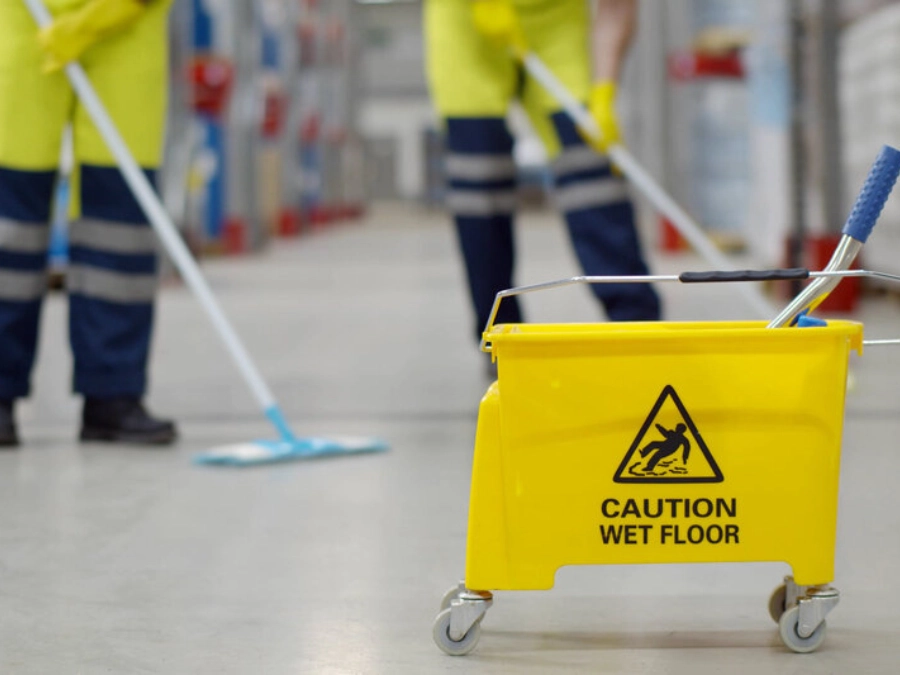
Slippery floors require anti-slip signage and mats, manual lifting hazards need trolleys and safe lifting techniques, and electrical equipment requires regular maintenance and staff certification. According to a blog by Safe Tec, A safe workplace reduces safety hazards, increases productivity, minimizes property damage, lessens a corporation’s financial losses that could result from an incident, increases employee happiness, and protects a corporation’s reputation. Addressing these hazards through training and controls reduces incident rates and supports regulatory compliance.
Key prevention tools include wet-floor signage for high visibility, anti-slip floor treatments for enhanced traction, and slip-resistant footwear for improved stability. Precise Commercial Cleaners implements these comprehensive safety controls across all Brisbane client sites, delivering measurable reductions in fall incidents whilst protecting your staff and business reputation through proven safety protocols.
FAQs
What health and safety training is mandatory for commercial office cleaning staff in Australia?
Under the Work Health and Safety Act 2011, all commercial cleaning personnel must complete accredited training that covers hazard identification, emergency response procedures, and safe work practices. This training must address chemical safety, infection control, manual handling techniques, risk assessment processes, and equipment operation to ensure compliance with Australian WHS regulations and reduce workplace injuries.
How often should cleaning staff receive health and safety training updates?
Commercial office cleaning staff should receive annual refresher training to maintain current knowledge of WHS regulations and safety procedures. Additional training is required when new equipment is introduced, cleaning chemicals are changed, or after any workplace incidents. Regular toolbox talks and safety briefings should occur monthly to reinforce key safety practices and address emerging hazards.
What personal protective equipment is essential for commercial office cleaning?
Essential PPE for commercial office cleaning includes nitrile gloves meeting AS/NZS 2161.2 standards for chemical protection, safety goggles complying with AS/NZS 1337 for eye protection, chemical-resistant aprons or gowns rated Type 6, and respirator masks certified to AS/NZS 1716 for inhalation protection. The specific PPE requirements depend on the cleaning tasks performed and chemicals used in each workplace environment.
How should cleaning staff handle hazardous chemicals safely?
Cleaning staff must read and understand Safety Data Sheets before using any chemical product, wear appropriate PPE as specified, ensure adequate ventilation in work areas, and follow proper mixing and dilution procedures. Staff should never mix different chemicals, store chemicals in original containers with labels intact, and follow emergency procedures for spills or exposure incidents as outlined in the SDS documentation.
What are the key infection control practices for office cleaning?
Key infection control practices include using colour-coded cleaning cloths and equipment for different areas to prevent cross-contamination, changing gloves and washing hands between cleaning tasks, following one-way cleaning flows from clean to contaminated zones, and using EPA-approved disinfectants with proper contact times. High-touch surfaces like door handles, keyboards, and shared equipment require special attention with appropriate disinfection protocols.
How can cleaning staff prevent workplace injuries during office cleaning?
Workplace injury prevention involves proper manual handling techniques including correct lifting posture and team lifting for heavy items, regular equipment maintenance and pre-operation safety checks, wearing appropriate slip-resistant footwear, using wet floor signage and barriers, and conducting risk assessments before starting cleaning tasks. Staff should also receive ergonomic training to prevent repetitive strain injuries during routine cleaning activities.
What should cleaning staff do in case of a chemical spill or exposure?
In case of chemical spills, staff should immediately isolate the area and prevent access by others, refer to the relevant Safety Data Sheet for specific emergency procedures, use appropriate absorbent materials to contain the spill, and collect contaminated waste in properly labelled containers. For chemical exposure, staff should follow first aid procedures outlined in the SDS, remove contaminated clothing if necessary, and seek medical attention if symptoms develop or persist.
How does proper safety training benefit commercial office cleaning services?
Proper safety training reduces workplace accidents and insurance claims, ensures compliance with Australian WHS legislation, improves service quality and reliability, builds client confidence in professional standards, and reduces staff turnover through better working conditions. Well-trained cleaning staff can identify and mitigate hazards proactively, leading to more efficient operations and enhanced reputation for commercial office cleaning providers.
Book your free assessment with Precise Commercial Cleaners and see how we maintain Brisbane’s cleanest, healthiest office environments.